
01
Governance Clarity
Who holds authority and who holds accountability. A board that exists on paper reads as a board that does not exist.
Willie Finklin, MBA, CFRE | The Grant GOAT
By the time your proposal is open, most of the decision has already been made. It gets made in about ninety seconds, from what a stranger can see about your organization before a single word of your story is read.
Ten questions. Facts, not opinions. You will see what a funder can verify about you and the one thing capping how high you can place.
Not theory. Systems proven in the field.
The Real Problem
It is not just time. It is momentum. It is credibility. It is burnout. And it compounds every cycle you go through without fixing what is underneath.
Training funders to say no to you before you ever have a real chance.
That get rejected in the first sixty seconds, because the foundation is not there.
Chasing funding that was never a fit for your organization in the first place.
Because you think the problem is you. It is not. It is the system you are missing.
Every one of those traces back to the same thing: a factor a funder could not verify. Fix the factor and all four stop happening at once.
Start With the Need
You should not have to learn a service menu before you know where to go. Tell me what you are trying to accomplish and I will point you to the right next move. If you are not certain, do not guess. Most organizations place themselves a full level above where funders place them.
Ten questions on what funders can actually verify. You will get the one constraint capping your placement on the Fundability Path and what it is costing you, before you touch another application.
I have the vision. I need to know whether a 501(c)(3) is the right vehicle before I file, not after.
Decide First →The organization exists on paper. Governance, systems, financials, and compliance have not caught up to the mission.
Build the Foundation →The work is real. The story, the numbers, and the documents are not saying so yet.
Close the Gap →The foundation holds. What we are short on is hours, research, positioning, and someone who has done this a few hundred times.
Grant Support →Courses, workshops, templates, and tools that build capacity inside my organization instead of renting it.
Learn →For-profit and social enterprise. Evaluate what is real, strengthen the request, and pursue funding that fits your stage.
Business Funding →Different clock, different criteria. Eligibility turns on your facility and your risk profile, not on your funding history.
Security Grant →The Fundability Difference
I have watched founders with better programs lose to organizations doing half the work, and conclude they were not good enough. That is almost never what happened. Funders are not evaluating your passion. They are evaluating whether your organization can execute the work, steward the money, prove the outcome, and still be standing at the end of the grant period.
That decision gets made from the outside, using whatever evidence you have made visible. Which means the work does not start with the ask. It starts with what a stranger can see when they look you up.
"The goal is not to win a grant. The goal is to build something worth funding again."Willie Finklin, MBA, CFRE
The Diagnosis
You can do real work, serve real people, and still be unfundable on paper. Funders cannot audit you before they fund you, so they read five factors instead. Every time, in the first few minutes, before your story is ever read.
Who holds authority and who holds accountability. A board that exists on paper reads as a board that does not exist.
Whether the work runs on systems or on one exhausted person. Funders are asking what happens if you get sick.
Whether the organization can steward money. Clean books, a real budget, numbers that survive a second look.
Whether you are current and clean. Filings, registrations, and status, checked in ninety seconds by anyone.
Whether the story, the programs, and the numbers agree. When they disagree, funders believe the numbers.
The Fundability Path
They are not asking whether you deserve funding. They are deciding how much risk you represent, and that decision determines what you get, how much of it, and whether they ever come back.
You have the mission and the conviction. The organization is not built yet, so there is nothing for a funder to evaluate. This is a real place to be standing, and it is the only one where the answer is to build rather than to apply.
Ten questions. Facts, not opinions. You will know what a funder can verify about you in ninety seconds and the one thing capping how high you can place. The full Fundability Assessment scores all thirty-three conditions when you are ready for the complete picture.
The Work
Three stages, in order. Skip one and the next two will not hold. This is the same sequence whether I am doing the work with you, for you, or teaching you to do it yourself.
Governance, operations, financials, and compliance. Not paperwork. This is the evidence a funder uses to decide whether you can hold their money.
What you have built means nothing a funder cannot see. Documents, positioning, and a narrative where the story and the numbers finally agree.
Research, fit, timing, and proposals written from a foundation that holds. This is the stage everyone wants to start at, and the one that only works last.
Proof Over Promises
Funding matters. So does what changed before the award. These are a few examples of organizations that strengthened the structure, clarified the story, and gave funders something credible to invest in.

He does not just look at the application. He looks at the bigger picture and helps you build something that funders can understand and invest in.
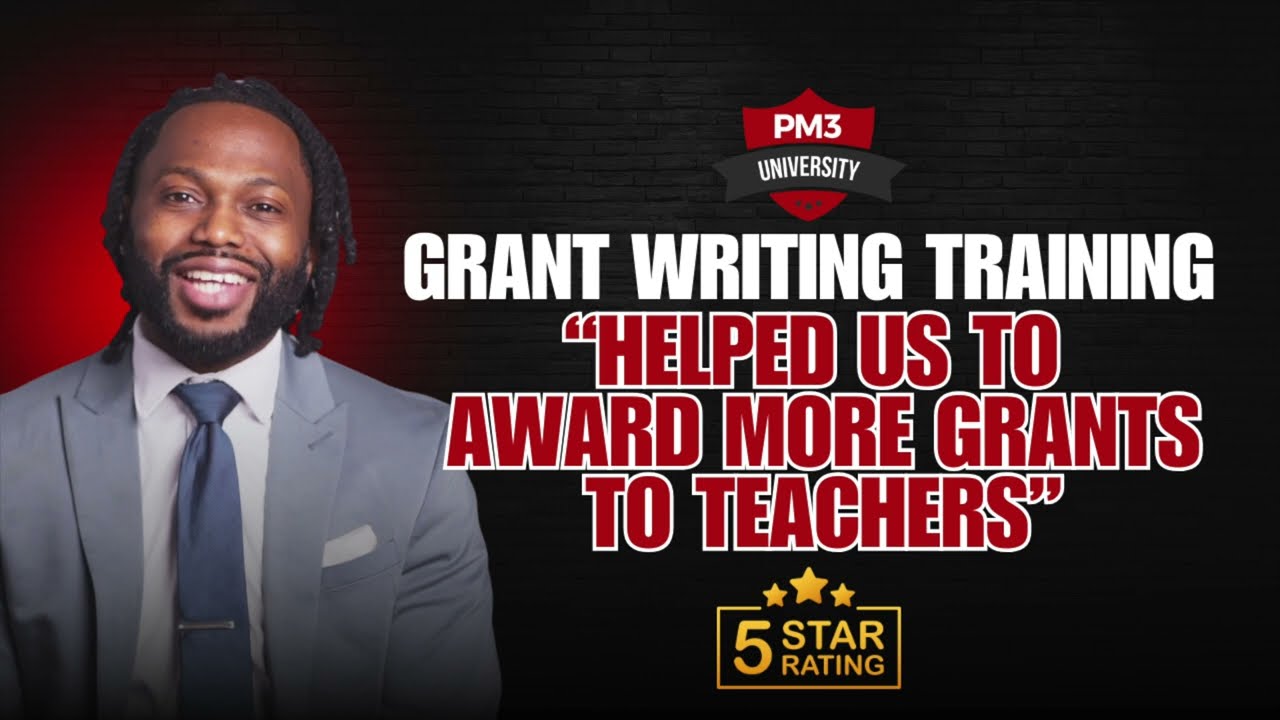
More grants awarded, higher quality applications, and the highest total funding for teacher projects in years.

The Nonprofit Launch gave me the clarity, tools, and materials I needed to bring my vision to life.
Selected client outcomes shown for illustration. Funding decisions are made by third parties and past results do not guarantee future awards.
Where You Fit
Each of these solves a different problem. If you pick the wrong one it will not work, which is why the free check exists. Run it first and this section picks itself.
Let me write the grants. You run the mission. You do not have time to become a grant writer. You need someone who already is one and who knows how funders decide.
See If We Are a Fit →Six grants or targeted solicitations. One year. Stop applying randomly and start building a pipeline sized to your actual capacity.
Check Availability →Everything you need to be funding ready. Templates, frameworks, and step by step guidance for the documents and systems funders expect to see.
Get the Kit →One professionally written narrative that becomes the foundation for every grant you file after it. You never start from scratch again.
Start the Build →Build Your Own Capacity
The Art & Science of Grant Writing is the full course: funder psychology, narrative structure, and budget alignment, using the exact frameworks behind more than $30 million in funding. Plus free Snapshots, templates, tools, and practical resources if you would rather start there.
Start with what a funder can already verify about you. Ten questions will tell you more than five more applications will.