
About
I Have Watched Good Missions Die From Bad Structure.
That is the whole reason this exists. I am Willie Finklin, MBA, CFRE. I help nonprofit leaders see their organization the way funders, boards, auditors, and partners already see it, and then close the distance before the opportunity arrives.
Grant writing is one part of that. It is the last part. By the time a proposal is being written, most of the decision has already been made by things that were built, or not built, months earlier.
The Numbers
Here Is What They Mean and How They Are Counted.
Most consultants put a number on a website and hope nobody asks. I work in a field where funders verify claims for a living, so mine come with definitions. If you are on a board evaluating whether to hire me, this is the section you came for.
Total funding secured
Across grants, contracts, major gifts, sponsorships, and events, for organizations I served in a lead development or strategy role.
Grant funding specifically
The grant portion of the total. Private foundation, corporate, institutional, and government awards.
Organizations served
Through consulting engagements, training, workshops, technical assistance, and course instruction.
Years of practice
In nonprofit fund development, organizational readiness, and grant strategy.
Secured so far in 2026
$0
In grant awards
As of October 31, 2026. This year's awards fall within the cumulative totals above, which are updated each January.
The Credential
Most People Do Not Know What CFRE Means. Funders Do.
Certified Fund Raising Executive is the international standard for fundraising professionals. It is not a course you take or a certificate you buy. It is an independent certification requiring documented professional experience, verified education, demonstrated results, and a proctored exam covering ethics, accountability, and practice standards.
It also expires. Recertification every three years means the credential reflects current practice, not something earned once and displayed forever.
Anyone can call themselves a grant writer. There is no license, no board, and no consequence for getting it wrong.
- 01Documentation across three categories: Education, Professional Practice, and Professional Performance
- 02A minimum of 80 points in Education, from academic study, continuing education, teaching, or authoring in the field
- 0336 months of paid professional practice, where at least half of the role is fundraising or fund development
- 04A minimum of 55 points in Professional Performance, earned on dollars actually raised and on major campaigns or management projects
- 05All qualifying activity earned within the five years immediately preceding application
- 06A written examination covering donor research, securing the gift, relationship building, volunteer involvement, leadership, and ethics
- 07Agreement to uphold the Donor Bill of Rights and an enforceable code of ethical practice
The Other Side of the Table
I Have Scored Federal Applications.
Not read them. Scored them. I have sat on a federal review panel, worked through a stack of applications against a scoring rubric, and watched worthy organizations lose points on things they never knew were being counted.
That is where most of what I teach comes from. Not from theory about what funders want, but from being the person deciding, with the criteria in front of me and a limited pot of money behind me.
I know what a reviewer sees, because I have been the reviewer.
Why This Work
My First Grant Was Rejected.
I have always been a solutionist. I look at how things work, where they break down, and what has to change to produce a different result. Grants became no different.
I could have treated that no as proof that the mission was not good enough, or that the funder simply did not understand what we were trying to do. Instead, I studied the decision. I wanted to understand what they saw that I had not yet learned to see.
That rejection helped shape the thinking behind my next 17 wins. Not because I suddenly learned how to write prettier proposals, but because I started understanding how funding decisions were actually being made. I began looking beyond the application at the organization behind it: the structure, the numbers, the governance, the capacity, the evidence, and whether all of those things told the same story.
Years later, when I sat on the other side of the table as a federal grant reviewer, it became even clearer.
A reviewer is not simply deciding whether your mission is worthy. In many cases, several organizations in the room are doing worthy work. The decision is also about stewardship and risk. Can this organization be trusted with resources it does not own? Can the team execute what it is promising? Are the financials credible? Is the organization compliant? Does the evidence support the story being told?
That is when a lot of what I had experienced throughout my career started connecting.
Passion matters, but passion does not eliminate risk. People may want to believe you, but funders ultimately have to make decisions based on what you can demonstrate.
You do not build trust by asking someone to trust you. You build it by giving them enough evidence that trusting you becomes a reasonable decision.
That realization also changed how I think about winning and losing funding.
Funding is not a silver bullet, and fundability is not a permanent status. Organizations move through seasons. They win grants. They lose grants. They grow faster than their infrastructure. Revenue fluctuates. Leadership changes. Programs evolve. A funder who gives you $25,000 today may watch what you do with it before trusting you with $250,000 tomorrow.
So a rejection does not automatically mean something is wrong with your organization. And an award does not mean the work is finished.
This is a long game.
My work became less about helping organizations chase the next opportunity and more about helping leaders understand what their organization needs to become for the opportunities they want next.
Sometimes that means writing the grant. Sometimes it means strengthening the board, cleaning up the financial story, clarifying the program model, building measurable outcomes, or telling a founder that the organization is not ready for the opportunity they want yet.
I will celebrate your wins with you. I will help you navigate the seasons when funding gets harder. And I will tell you the truth when your structure has not caught up with your vision.
My job is not to convince you that every organization deserves every grant. My job is to help you build an organization that can earn trust, manage opportunity, survive the cycles, and be ready when the right funding arrives.
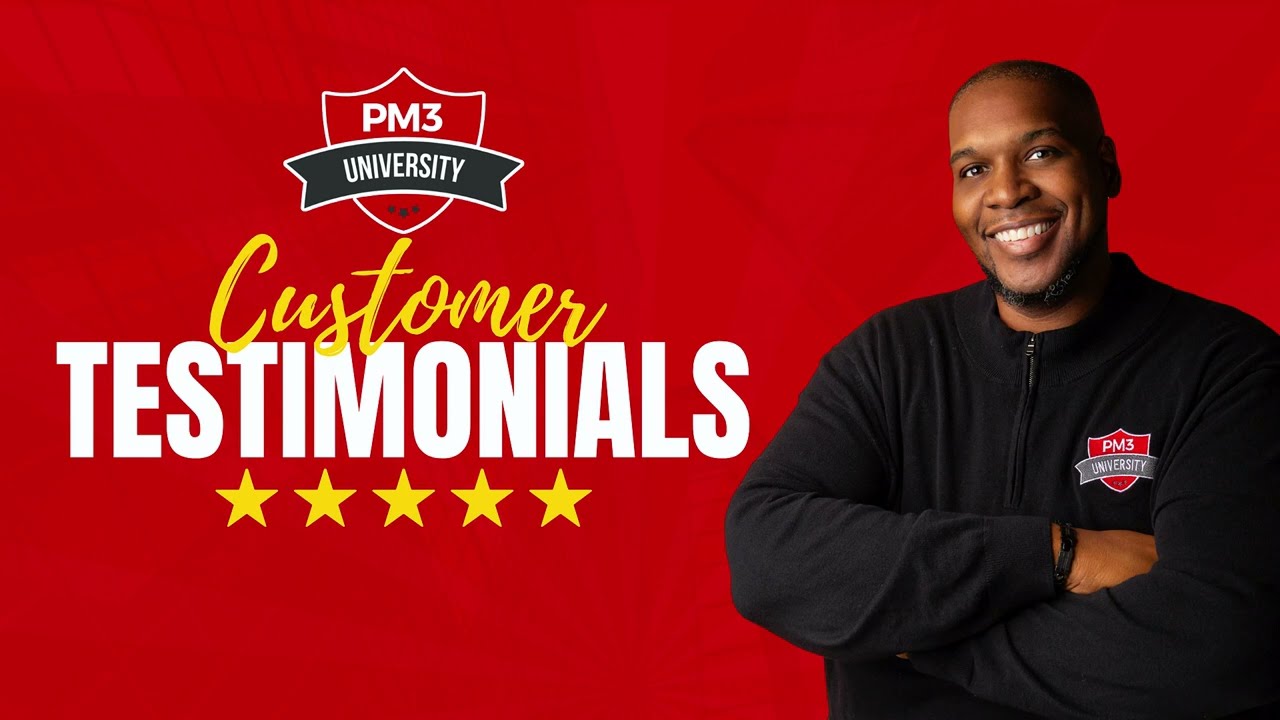
I have referred individuals who shared a vision with me to PM3 University, and then they told me that they gave them their money back, because they were not willing to do the work necessary to be able to be competitive when it comes to a grant proposal and to a bidding process.
You want someone that's going to hold you accountable, that's going to be open, honest, and candid, and at the same time share that accountability to make sure that you meet those deadlines and expectations.
"That level of integrity is so few and far in between."
The Frameworks
This Is Not Borrowed Methodology.
Everything I use with clients came out of reviewing thousands of funding relationships and watching which organizations moved and which ones stalled. These are mine, they are documented, and they are the same frameworks behind the books.
The Fundability Factors
The five things funders read when they cannot audit you: governance clarity, operational readiness, financial credibility, compliance alignment, and narrative alignment. Every funding decision runs through them.
The Fundability Path
Emerging, Invisible, Questionable, Credible, Trusted. Where a funder places you determines what you get, how much, and whether they come back. Most organizations place themselves a level above where funders place them.
The Capital Maturity Ladder
Relational giving, private foundation grants, institutional grants, government contracts. As the capital rises, so does the infrastructure demand. Winning at the bottom proves you can win at the bottom.
How I Work
I Would Rather Tell You the Truth Than Take Your Money.
These are not preferences. They are the conditions under which this work produces results, and I have learned each one the expensive way.
Readiness before requests. Always in that order.
If your foundation is not built, a proposal will not save it. I will tell you that on the first call, even when you came to hire me for writing. Sometimes the most valuable thing I do for a founder is talk her out of a deadline.
One-off proposal work starts at Credible.
If your organization has not run programs consistently, won grants consistently, or secured funding that lets you operate comfortably, a single proposal is not what you need. Below Credible, I will point you toward building instead, because writing on a foundation I did not get to build sets us both up to lose.
Engagements start at six months.
Structural work does not happen in four weeks. A six-month floor means I am building something that holds rather than producing a document that expires with the deadline.
Your numbers have to be real before I use them.
I will not write a claim into a proposal that your records cannot support. Not because of the rules, though there are rules, but because the funder who catches it remembers your name for the wrong reason for a very long time.
The Books
The Full Methodology, In Print.
The frameworks above are the short version. Three books, one spine, each at a different altitude. Pick the one that matches where you are and I will let you know when it is ready.
Foundations First
Building the signals internally. What has to be true inside your organization before a funder is ever involved.
Join the waitlistFUNDABLE
Making the signals visible externally. Where a funder places you, why, and how to close the distance.
Join the waitlistTurning Funders Into Fans
What happens after Trusted, when trust becomes relationship and funders become champions of the work.
Join the waitlistStart With What a Funder Can Already Verify About You.
Ten questions. Facts, not opinions. You will see the one thing capping how high you can place, before you spend another month writing into a ceiling.